
Why your washing machine smells like mildew
The smell is almost never the drum. It is biofilm — mold, bacteria and detergent residue bonded into a layer — sitting in four places a wash cycle never properly reaches. This page explains where it lives, what it looks like, and what you can do about it yourself before paying anyone.
Your front-loader is a sealed, horizontal drum. Water pools in the rubber door gasket instead of draining away, the door stays shut between loads, and modern cycles run cold and short. Cold water plus low detergent doses is efficient, but it leaves residue that hot water used to carry off. Residue plus moisture plus a dark, closed space is how biofilm starts.
Once it forms, it is physical. It does not rinse away, and it does not respond to another cycle of the same water that created it.
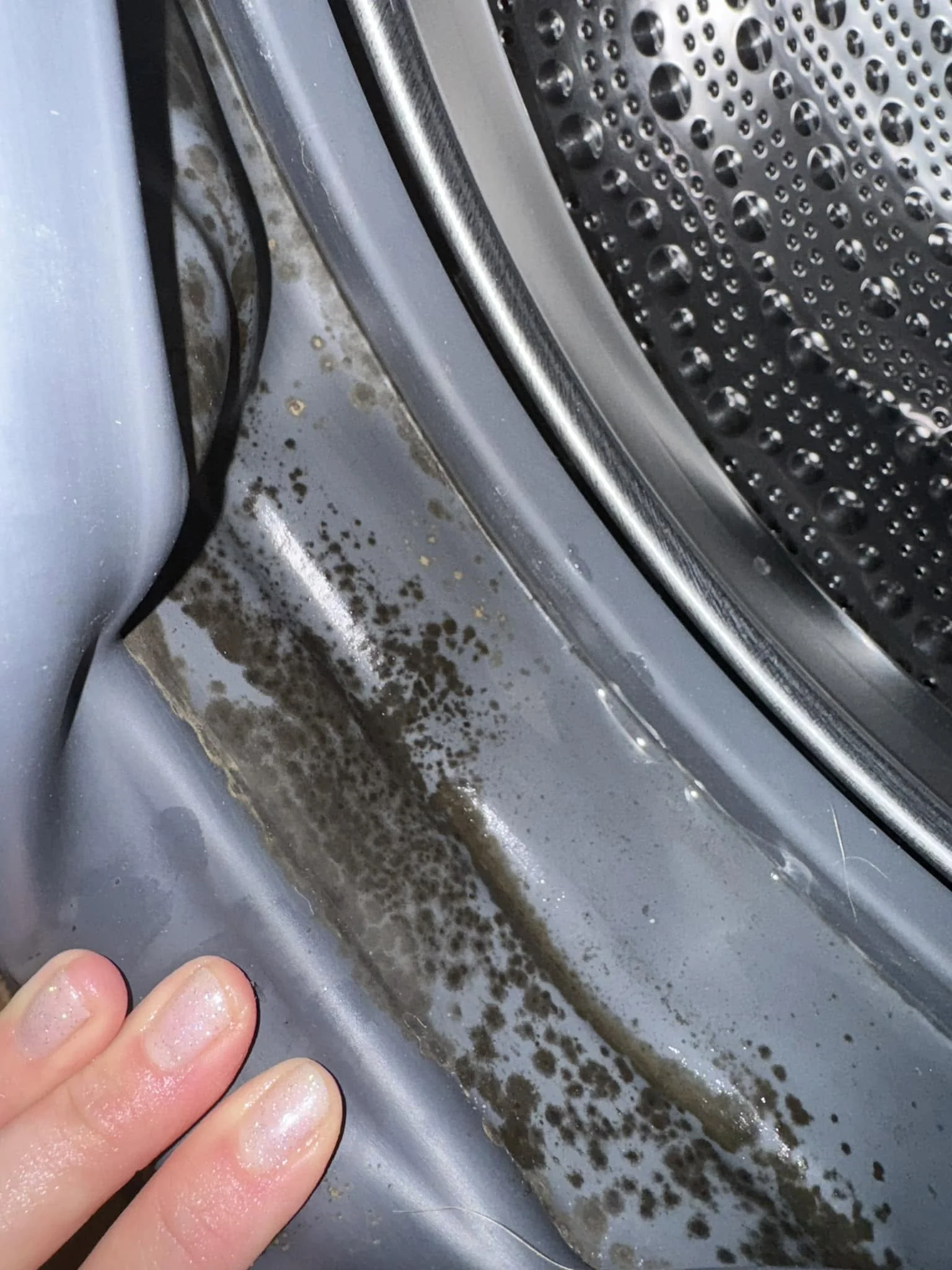
The four places the smell actually comes from
In our experience these four account for nearly every odor complaint. None of them are cleaned by a wash cycle.
1 · The door gasket folds and drain ports
The single most common source. Water sits in the fold after every load. Small drain ports inside the gasket clog with lint and residue, so the water that should leave stays. Pull the fold open and look — most people have never seen the inside of theirs.
2 · The dispenser cavity and siphon caps
Pulling the drawer out shows you the drawer. The housing it slides into is the problem: fabric softener and detergent thicken in the cavity above and behind it, and the siphon caps gum up. Sweet, sour smell on a warm day.
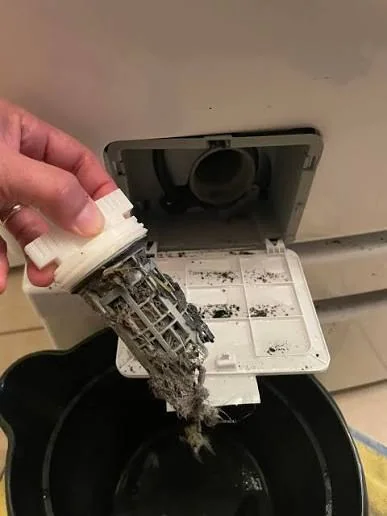
3 · The drain pump filter and trap
Behind the small access panel at the bottom front. It holds standing water permanently, and it catches lint, hair, coins and grit. Many owners do not know it exists, and many have never emptied it. When it is bad, it is the worst-smelling part of the machine.
4 · The outer tub and drum baffles
The stainless drum you can see is not the whole tub. Residue builds in the space around it and inside the baffles, which is why a machine can look spotless and still smell the moment you open the door.
What it looks like when it comes out
One pair, same machine, same day. The full gallery of drain filters, dispensers and gaskets is on the home page.
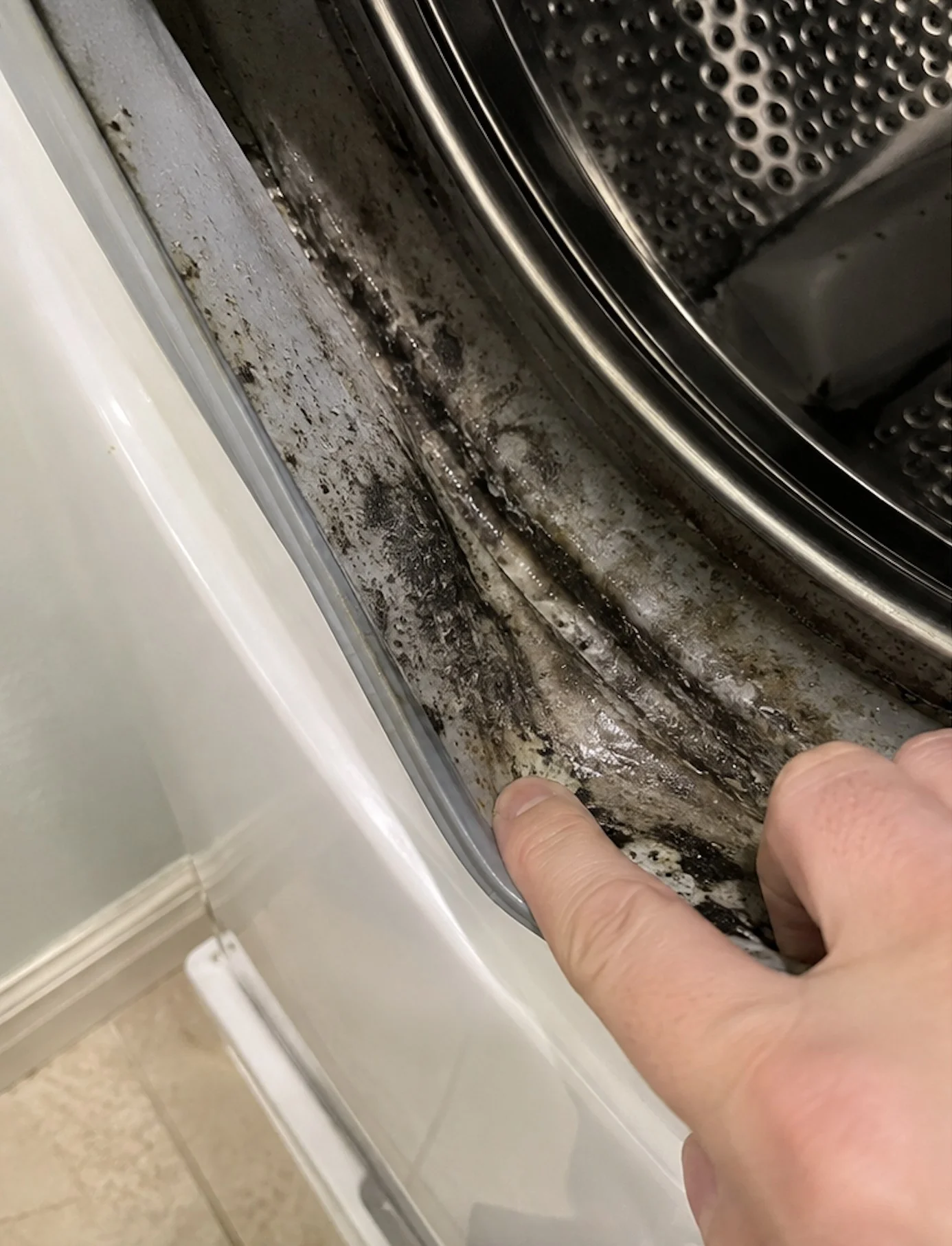 Before
 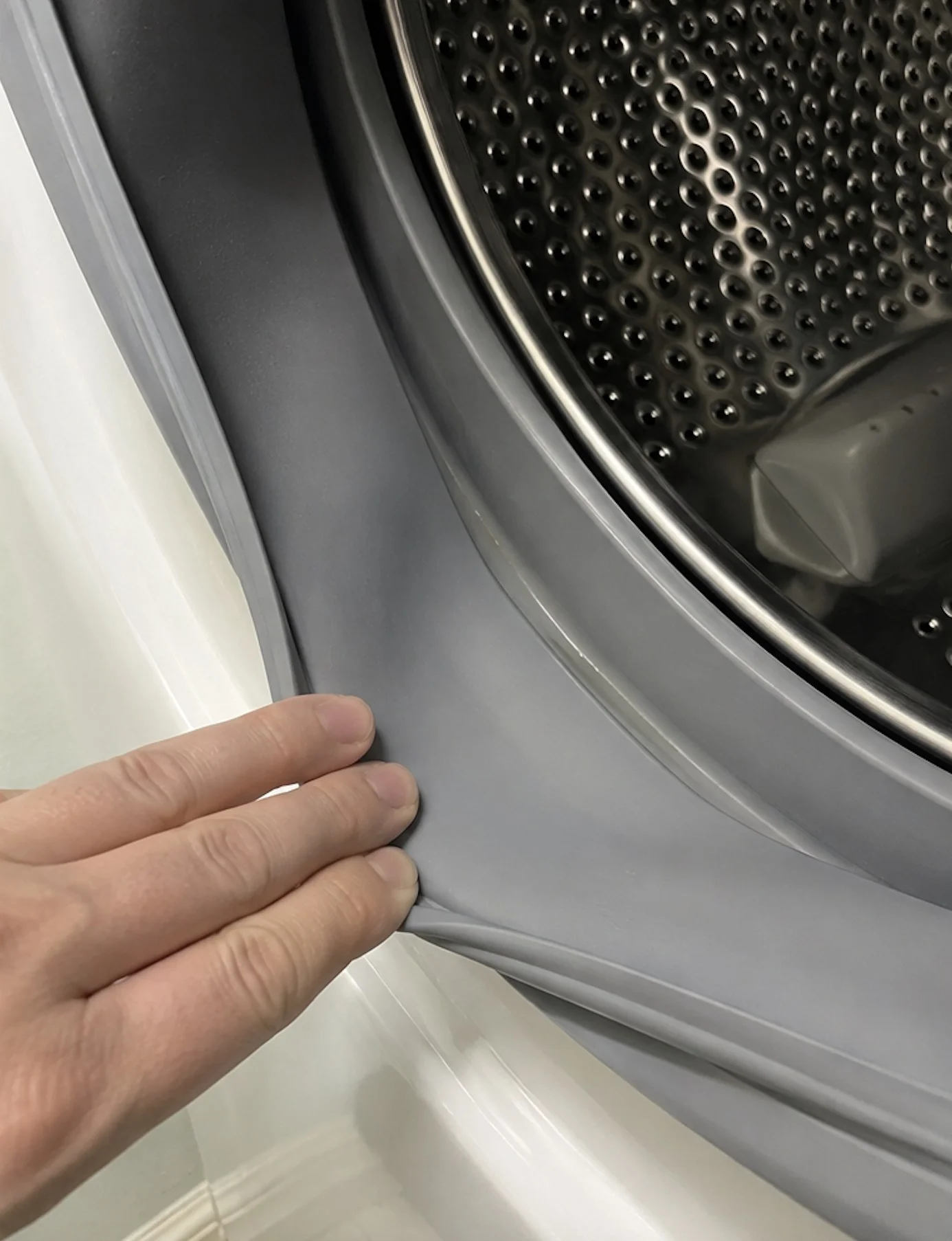 After
After Why your old top-loader never did this
A top-loader sits vertically, drains downward, and its lid is open most of the time between loads. There is no rubber door gasket holding a puddle, and no sealed cavity staying damp for days.
A front-loader trades all of that for water efficiency. It uses a fraction of the water, which is genuinely better — but less water means less rinsing, and a sealed door means the inside never dries out. The design is not defective. It just needs opening up occasionally, and nothing about a normal wash cycle does that.
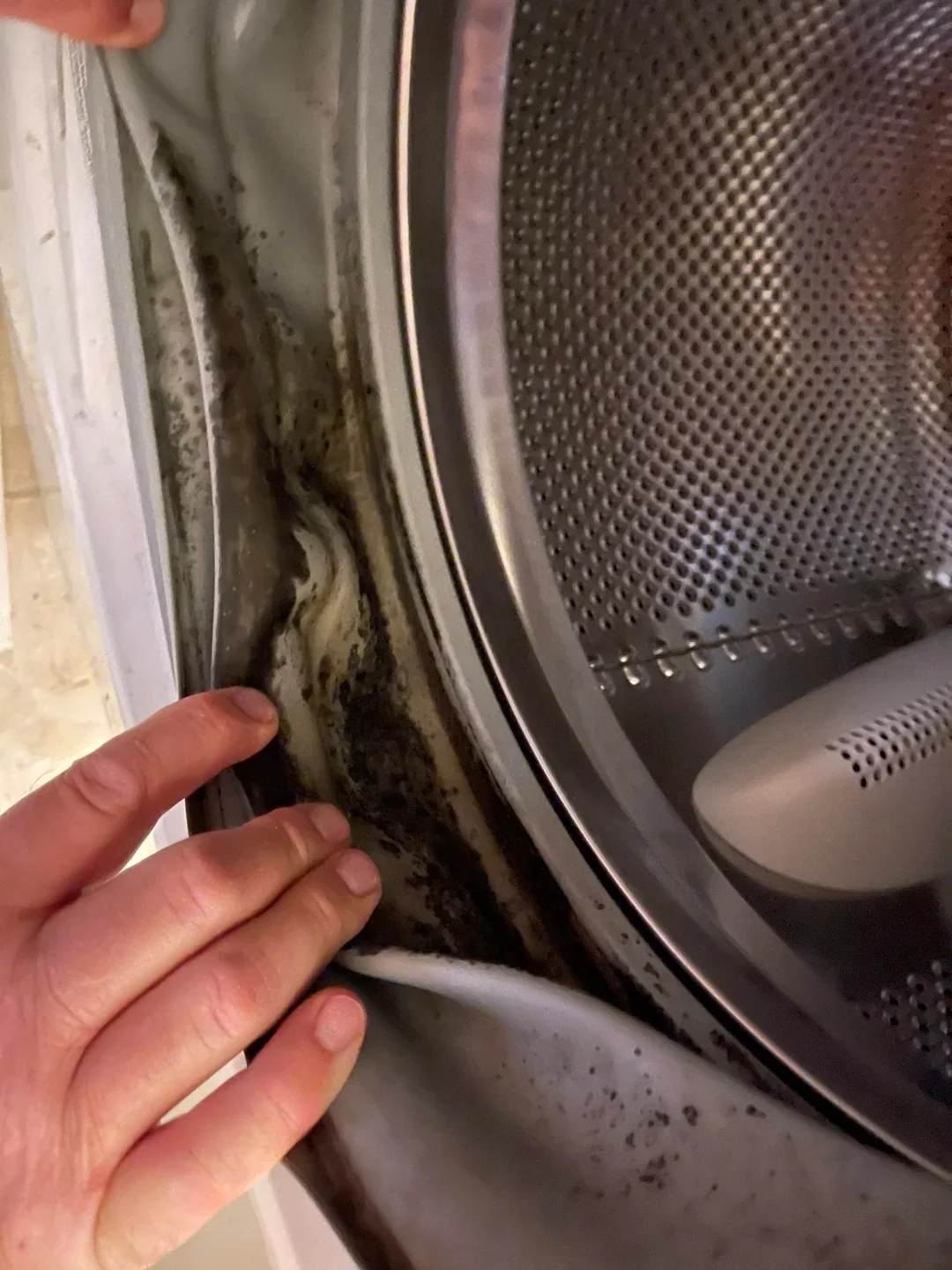
What the smell is telling you
Odors are not interchangeable. What you smell narrows down which of the four places to look at first.
Musty, damp, like a wet towel left in a bag
The classic one, and almost always the door gasket. Mold in the fold, sitting in water that never drains because the ports are blocked. Open the fold and look before you do anything else.
Sour, sweet, or vaguely like old milk
Detergent and fabric softener breaking down. Look at the dispenser cavity and the siphon caps, not the drawer you can see. Worse in summer and worse if you use softener every load.
Rotten, sulfurous, like a drain or a sewer
Usually the drain pump filter and trap holding stagnant water and packed lint. It can also be the drain hose or the household trap it empties into, in which case cleaning the machine will not fix it — that one is a plumber, and we will tell you so.
Burning, hot plastic, or electrical
Not a cleaning problem. Stop using the machine and call an appliance technician. We are not one, and we will not clean a machine that smells like this.
Clean clothes that smell fine wet, then sour once dry
Residue transferring onto fabric rather than an odor in the room. Points at overdosing detergent and at buildup in the drum and outer tub. Cut your dose first and see what changes.
Is mold in a washing machine actually dangerous?
We are not going to tell you your washing machine is making you sick. Nobody has studied that specifically, and nobody selling you a cleaning service should claim it.
What we can point to is what public health agencies say about mold generally. The CDC's position is that exposure to damp, moldy environments may cause a range of effects, or none at all — a stuffy nose, sore throat, coughing, burning eyes or a skin rash for some people. People with asthma or a mold allergy can react more strongly, and people with weakened immune systems or chronic lung conditions can develop lung infections.
There is no good evidence establishing a health risk from mold inside a washing machine specifically. What we will say plainly: visible buildup, persistent odor and residue inside the appliance that cleans your clothes are reasonable problems to address on their own terms.
What you can fix yourself, for free
Most of this you can do this afternoon. If it solves your problem, you do not need us.
- 01 Leave the door and the dispenser drawer ajar between loads. The single most effective habit there is. It lets the gasket and the cavity dry out.
- 02 Wipe the gasket fold dry after the last load of the day. Pull the fold open with your fingers and run a cloth all the way around, including the bottom where the water sits.
- 03 Use far less detergent than the cap suggests. HE machines need a fraction of a conventional dose. Overdosing is the most common cause of residue we see. Skip fabric softener where you can.
- 04 Find your drain pump filter and empty it. Small panel, bottom front. Your manual shows how. Put a shallow pan and a towel down first — there will be water. Do it twice a year.
- 05 Pull the dispenser drawer right out and wash it in the sink. Most drawers release with a tab or a firm pull. Clear the siphon caps while it is out.
- 06 Run the machine's own cleaning cycle, hot, empty, monthly. It is worth doing. Understand what it does: it cleans the wash path, not the four places above.
When it is past that
If you have done all six and the smell is still there within a day of a wash, the buildup is in places that need the machine opened rather than cycled. That is the entire reason this service exists.
$299 flat, about two hours, and you see the 14 points and the full gallery on the home page.
Mold and smell questions
Everything else — pricing, warranty, what we don't do — is on the questions page.
Why does the smell come back after I run a cleaning cycle?
A cleaning cycle circulates hot water and cleaner through the wash path. The smell usually is not in the wash path — it is in the gasket folds, the dispenser cavity and the pump filter, which the cycle does not fully reach. The cycle knocks the odor back for a few loads, then it returns from the same places.
Is the smell in my machine or in my clothes?
Usually the machine, and the clothes carry it out. A quick test: run an empty hot cycle, then open the door and smell the gasket fold directly rather than the drum. If the fold smells, the machine is the source.
Does bleach fix it?
Bleach can kill surface mold on the visible face of the gasket. It struggles with biofilm, which is a bonded layer that shields itself, and it does not reach the drain ports or the pump filter at all. Never mix it with other cleaners.
Will vinegar damage my machine?
Some manufacturers advise against routine vinegar use, because acid over time can degrade rubber seals and hoses. Check your manual before making it a habit. It also does not remove buildup from areas the water never touches.
How long after a deep clean does the smell go away?
Immediately, in most cases, because the source is physically removed rather than masked. If an odor we addressed returns within 30 days, we come back at no charge.
Can it be removed for good?
Removed, yes. Permanently prevented, no. A front-loader is a sealed, damp environment, so buildup begins again from the day it is cleaned. The habits above slow it down considerably. For many households an annual deep clean is a reasonable interval.
$299 flat. About two hours. Mon–Sat.
Anywhere in the Dallas–Fort Worth Metroplex. No card at booking, nothing to pay until the job is done and you are satisfied.